
Morning heel pain that eased once moving: how a busy working mum got back to swimming and dancing
A PLANTAR FASCILITIS STUDY : PUBLISHED 15/06/2026

What brought her in
Do your first steps in the morning feel like you’re “stepping on a bruise” under the heel — but the pain settles once you’ve warmed up?
- Pain under the heel on first steps after sleep or sitting for a while
- Symptoms were most obvious in the morning
- Once she was moving, she often felt better, and dancing sometimes helped
- Over a couple of months, it felt like it was gradually worsening, and she started holding back on exercise
Why she sought help
Mrs T was doing a lot “right” (staying active, good fitness base) but felt stuck: the pain kept returning after rest. She wanted guidance to identify what was contributing and to build a plan she could actually keep up with.
What changed over time (outcomes)
Appointments were more frequent early on, then spaced out as she improved:
- First 2 weeks: approx. 2 visits per week
- Following ~4 weeks: weekly
- After that: 3–4 weekly check-ins as needed
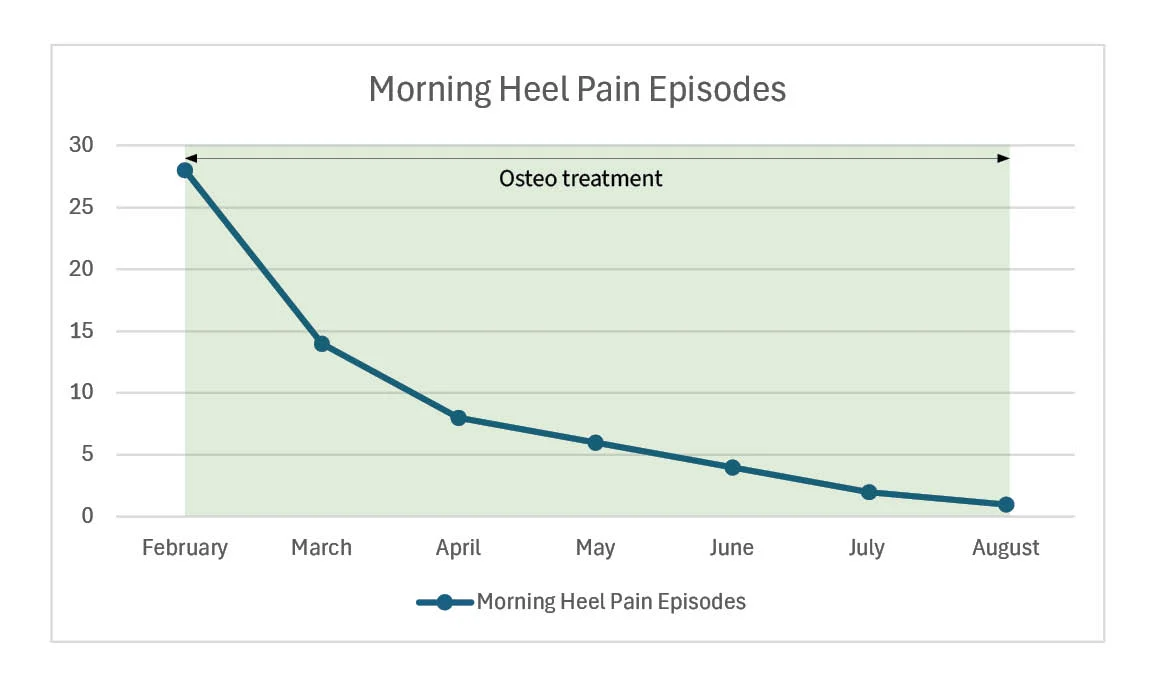
Her symptom pattern improved gradually:
- From daily morning pain → to a couple of times per week → then about fortnightly
- She was able to continue bay swimming and return to multiple dance events, adjusting load along the way
Key takeaways
- Morning heel pain that eases once moving often benefits from a plan that addresses tissue capacity, ankle/foot movement, and load management, not just “rest”.
- Keeping some activity (when sensible) can be part of recovery – the trick is dosage and progression.
When to get checked sooner
Seek prompt assessment if heel/foot pain is associated with significant swelling, redness/heat, night pain, numbness/tingling, fever, sudden inability to weight-bear, or if you have relevant medical risk factors (e.g., diabetes or inflammatory arthritis).
Interested in help?
If your heel pain is persisting or recurring, an osteopathic consultation can help clarify what’s driving it and map a realistic return-to-activity plan.
If your heel pain is persisting or recurring, an osteopathic consultation can help clarify what’s driving it and map a realistic return-to-activity plan.
Shared with permission. Identifying details may be changed for privacy.
This case study is for general education and isn’t medical advice. Individual needs vary—seek an assessment for your situation.