Easing Jaw Pain, Headaches and Neck Tension: An Office Professional’s Recovery Journey

Discover how a structured, multi-factor approach supported improvements in jaw pain, headaches and work tolerance

A JAW PAIN & HEADACHE CASE STUDY : PUBLISHED 04/06/2026

Ms JS

TMJ Case Study

An office-based creative professional
Occupation: Desk-based role with high computer demands
Presentation: Jaw pain, clicking, headaches, neck and shoulder tension
Goal: Reduce pain, improve sleep, and tolerate prolonged desk work more comfortably

Ms Js

TMJ Case Study

An office-based creative professional
Occupation: Desk-based role with high computer demands
Presentation: Jaw pain, clicking, headaches, neck and shoulder tension
Goal: Reduce pain, improve sleep, and tolerate prolonged desk work more comfortably

Background and Challenge:
This individual sought care for jaw pain that initially felt similar to dental pain, alongside jaw clicking, frequent headaches, neck tension and right-sided shoulder discomfort. These symptoms began to significantly affect:

  • Sleep quality
  • Chewing comfort
  • Concentration
  • Ability to sustain long hours at the computer, particularly during high-pressure work periods
Prior Medical and Dental Review
Before attending osteopathic care, the individual was assessed by both a dentist and endodontist. Dental health was considered sound, and infection was ruled out. This helped shift the focus toward:
  • The jaw joint (TMJ)
  • Muscle tension and clenching patterns
  • Neck and postural contributors

Assessment, Care Approach and Environment adjustments

Osteopathic Assessment:
Assessment suggested a combination of contributing factors, including:

  • Jaw irritation associated with clenching or grinding
  • Muscle overactivity in the jaw and neck
  • Headache contribution from upper neck tension
  • Upper back strain related to workstation setup
Jaw opening showed altered movement with clicking on the right side, alongside marked tenderness through the jaw, neck and shoulder muscles.
Care Approach
The care plan focused on reducing irritation, improving movement, and addressing contributing factors to help reduce recurrence. This included:
  • Gentle hands-on osteopathic care to the jaw, neck and upper back
  • Stretching and movement guidance
  • Pacing strategies and regular breaks from desk work
  • Workstation adjustments to improve support and reduce strain
  • Collaboration with dental care, including splint use for night grinding
Workstation Adjustments
A detailed workstation review identified several practical contributors to ongoing strain:
  • Limited chair movement due to a shag-pile rug
  • Reduced forearm support during mouse use
  • Chair height set too low
Adjustments included:
  • Removing the rug and trialling a chair mat
  • Raising chair height
  • Sitting closer to the desk
  • Improving forearm support
  • Introducing regular movement breaks

Result and Outcome:

Over the early phase of care, the individual reported:
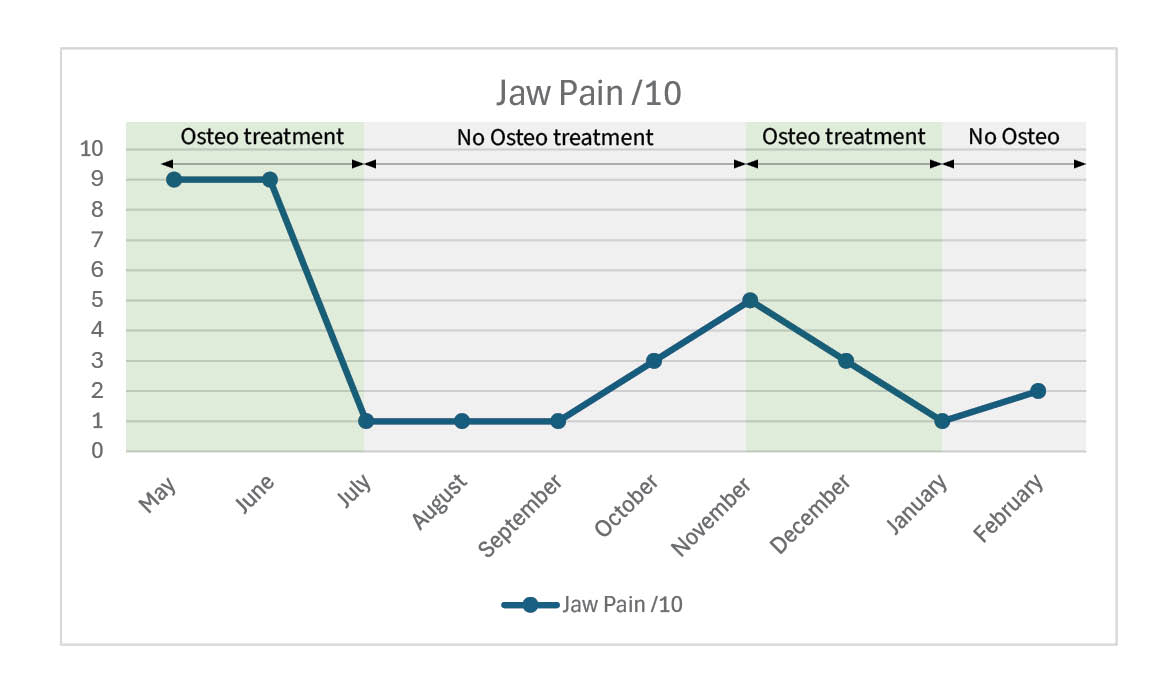
  • Pain reducing from 9/10 to 0–1/10
  • Fewer headaches
  • Improved comfort with chewing
  • Better sleep quality
  • Increased tolerance for desk work
  • Reduced reliance on medication
During periods of increased work stress, some flare-ups occurred. However, these were:
  • Less severe than the initial episode
  • More manageable
  • Responsive to follow-up care
Pain scale

Current Status

The individual continues with occasional maintenance care. Symptoms are now generally manageable, with intermittent flare-ups rather than persistent high-level pain.

Conclusion: What This Case May Suggest
This example highlights how jaw pain and headaches may involve multiple contributing factors, including muscle tension, work habits, and environmental setup.

A combined approach addressing:
  • Movement
  • Load management
  • Ergonomics
  • Co-management with other providers
may be helpful for some people experiencing similar concerns.
If you’re experiencing jaw pain, headaches, or neck tension affecting your daily activities, an individual assessment may help identify contributing factors and appropriate management options.

Shared with permission. Identifying details may be changed for privacy.
This case study is for general education and isn’t medical advice. Individual needs vary—seek an assessment for your situation.